Starting on Monday, we're launching into our school year for 2014-2015. Yes, it's only June, but we have been on "break" for the last two months (friends and family visits, and traveling, took up our time) and we're going to be taking a month-long vacation to the States at the end of August (our first trip back in two years!). We are itching to have some routine back in our lives, and want to get started well before we spend another month traveling.
This will be our second year homeschooling. I have a Preschooler (she'll be five in November) and a First Grader. I'm going to try to homeschool on a 4-day schedule, taking off one morning for myself (if I can find a daytime babysitter, which is the HARDEST job position to fill).
Needless to say, I feel like I've been working non-stop to get things ready before next week. I've been ordering materials, browsing Pinterest, printing worksheets, and trying to figure out our daily/weekly schedule. Even with all the planning I've done, I've not done nearly as much as I did last year. The past year was our first year officially homeschooling, and I learned a few things - one of which was to calm the heck down. I don't have to plan out every single lesson for every. single. subject. (See: my science curriculum last year. Oy.) And my kids learn an amazing amount by just soaking up the things around them: nature, library books, educational shows and computer games, and play.
So this year is hopefully going to be a bit more laid back as far as curriculum goes. We are eclectic homeschoolers... we mix a little bit of unschooling, interest-led learning, and classical philosophy and do what works well for each of us as individual learners. We're not doing a science curriculum. We're not doing spelling. Or a formal reading program. We are going to concentrate on reading/language arts/writing and math as our core, with lots of room to study everything else we find interesting: history, art, science, geography, religious, and special project work.
One other change that I'm going to try and implement this year are workboxes. Some homeschoolers go workbox crazy, but we are doing workbox *lite* (if that's a thing.). We struggled with finding a good routine last year, which in turn led to problems with my eldest knowing what was expected of her. This year, she'll have daily work to be completed before any afternoon activities (read: fun) can be done. I'll also be preparing work for my Preschooler, but this will be very informal and fun. She needs a fun year. Every day, they'll find something in their daily work, handwriting, and math boxes. History will be two days a week, and art, science, and religious education one day a week.
So here's what we're going to be using this year:
Daily Work
The first thing in our workboxes will be a daily worksheet. I bought the "1st Grade Morning Workbook" from Second Story Window for my First Grader, and she'll just have a one-sided page to do each morning. I thought this would be a great way to cover several things in small increments (reading, writing, math, and spelling) over the course of the year.
For my preschooler, I will use coloring pages, simple worksheets, or activities in her "daily work" drawer. She hates sitting and doing workbooks, so this will have to be something fun to start her school day.
Handwriting
In our handwriting drawer will be one page of handwriting work. For my first grader, this will be a page from her Getty Dubay workbook. She does not enjoy writing things out by hand, and complains about her hand getting tired. She also continues to make mistakes with some letters and numbers. So, this is something that I want to work on despite her predicted protests. I know handwriting will become easier as she grows older, so I'm fine with her doing just one page per day. We'll work on italics for a while, and when that seems to be better, I'll let her start learning cursive (which she is very interested in).
My preschooler will also have a daily letter- or number-tracing page to complete. And because she is opposed to workbooks, she'll have the option of completing the page with a pencil/crayon, or using her markers/dry-erase board or a gel bag to practice her writing. There are lots of free handwriting pages online, and I might use these from Confessions of a Homeschooler.
Math
My eldest is a year or two ahead in math. It seems to come easily to her, and she enjoys it, so we're following her lead. She's finishing up her Math Skills Grade 2 workbook, and will be starting Teaching Textbooks Math 3 in the next week or two. TT3 is a computer-based curriculum that needs little-to-no help from parents (yay!). She is very excited about doing math on the computer and loved the demo lessons that we tried before buying. We'll see how well she does with the third grade curriculum, and will do some first/second grade review if needed.
While my eldest is on the computer, I'm going to be doing some simple, fun math games with my preschooler. She thrives with one-on-one time, and we ordered some manipulatives for our core math work (counting bears, pattern blocks, scale, clock, money, etc.). I also bought her the Math Skills K workbook in case she comes around to workbooks by the end of the year. It is very colorful with minimal work on each page, so I think she might come around to working on one page every day alongside me (and with plenty of manipulatives within reach).
History
I've debated about this a lot, but I think we're going to start over with Story of the World Volume 1. We started this last year, and have made it about half-way through. The girls seem to have enjoyed it and we've taken our time studying about the ancient peoples in the chapters we've read. However, there is so much to do with Story of the World that I think I'd like to start it over again and really dig in this year. I will be using this as the spine of our homeschool. Story of the World can be used for narration, dictation, copy-work, vocabulary, geography, social studies, music, art, read-alouds, and history. Almost all of this is spelled-out in the Activity Guide, and I'd like to make better use of it this year. What can it hurt to study the Ancients again? My preschooler is in love with ancient Egypt, and I'm sure she won't mind.
I'm also going to be ordering the audio cds so that I can upload them onto my phone and computer and play them during snack time, rest time, or travel in the van. I'm hoping this will also help the girls to soak up even more of the information.
Science
We're not using a science curriculum this year, but that doesn't mean we're not going to study science. We're going to be utilizing Brain Pop and Brain Pop Junior (can't say enough good things about these websites! worth every penny!). They have a science section loaded with videos, activities, vocabulary, book suggestions, and games for a whole slew of subjects aligned with Common Core (if you're worried about that sort of thing....). We'll be going through the videos one by one, completing the activities and checking out corresponding books from the library.
We'll also continue to fill our home with all things science - nature study, science toys (Snap Circuits, science experiment kits), books, and educational tv shows like the Magic School Bus and Cosmos (if you haven't watched Cosmos with your children, you should). My kids have learned an amazing amount from these things already (my 6-year-old can tell you about DNA, for instance), so we'll just continue to see where our interest leads.
Grammar
Grammar has become such a regular part of our lunch time that the girls hardly even know they're "learning grammar." I started First Language Lessons: Level 1 towards the end of the year and will definitely keep working through the levels. It is very repetitive, but for my young kids, that's okay. Each lesson takes about 5-10 minutes and I go through one lesson while the girls are finishing up their lunch. My 4-year-old can tell you the definition of a noun and my 6-year-old is learning about proper sentence form, capitalization, proper and common nouns, and narration. And that's good enough for me.
Art
We hardly did any arts and crafts last year, and I want to change that. Not only do I want my girls to get their hands a little dirty, but I want them to learn about some famous artists, and technique. That's where Home Art Studio comes in. I picked up the Kindergarten, First Grade, and Second Grade DVDS at a steal from Homeschool Buyer's Co-op. These videos were made by an art teacher who wanted to bring age-appropriate art classes into the home. My girls are SO excited about these, and we'll be doing one project each week.
Religious Education
We don't have a Unitarian Universalist church here, and have not found much of a religious community for ourselves or our children. I've become involved in a local Zen Buddhist temple, and have made friends with several priests, and am very grateful that my children have become involved as well. They enjoy going to the temple with me and feel very comfortable there. But in one year, we'll be moving back to the US, and our kids are going to need to learn a bit more about Christianity. I also want them to develop more spiritual awareness and their own relationship with God.
I purchased the most progressive, liberal, non-creedal Christian curriculum I could find, from where else but... Progressive Christianity. I'm going to try to do one lesson a week and see how it goes. I'll definitely be writing a review of this after we've jumped into it. If you'd like to see a list of lessons, go here.
Yay for school!
I can't even begin to tell you how excited I am to begin school on Monday. We have long-awaited dentist appointments that morning, but I'm not letting that stop us. Our appointments are early in the morning, and when we get back home, to school we'll go!
If you are homeschooling, when will you be starting your next school year? Have you used any of these books or curriculum? I'd love to hear what you're doing in your homeschool.
Saturday, June 14, 2014
Friday, June 13, 2014
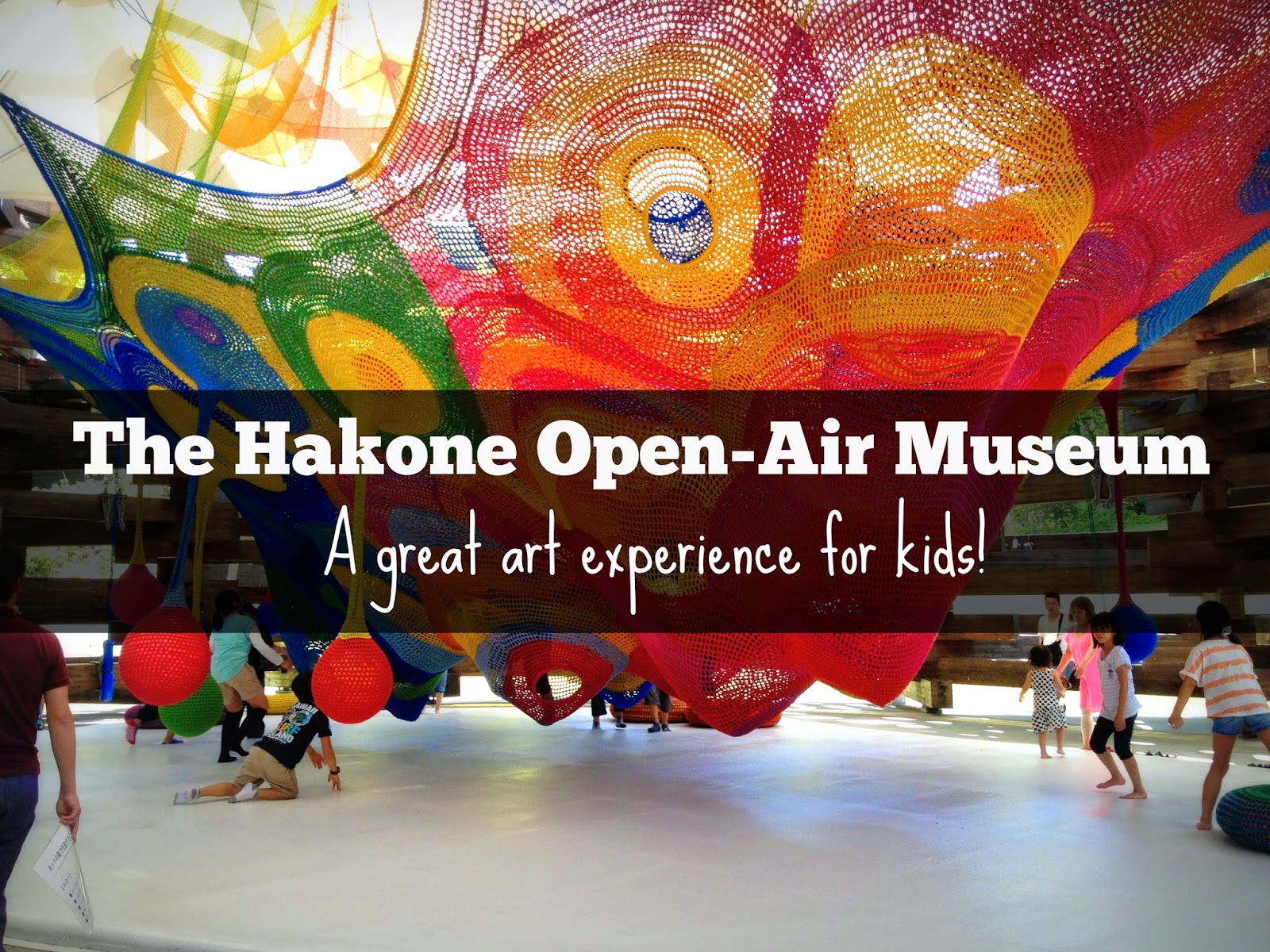
Hakone Open-Air Museum (with my sister!)
While my sister was visiting last month, I knew that one place she had to visit was Hakone. Up in the mountains, close to Mt. Fuji, with gorgeous views and lush greenery, Hakone was right up her alley. I've been to the Hakone shrine before, but another place in Hakone high on my list was the Hakone Open-Air Museum.
Here are the specifics for the museum:
Open 9:00am-5:00pm.
Parking is only 500 yen ($5 US)/day.
Adults: 1,600 yen
University and high school students: 1,200 yen
Elementary and middle students: 800 yen
There are two restaurants and two cafes, but you're also welcome to bring your own food.
If you have children, you might think they won't be too interested in an art museum... but this is no ordinary art museum. Hakone's Open-Air Museum has plenty of artwork that you can't touch, but it also has several areas dedicated specifically to children and their exploration of art. That's right - this art museum has art that is made to be played upon. Two areas are outdoors, but there is also an indoor area as well (we didn't go in because of time constraints). My girls had a blast, and my sister and I just laid in the grass and enjoyed the mountain air while the girls tired themselves out. It was the best visit we've ever had to an art museum.
| The first play area we came upon. Only children were allowed to climb on the art, and I was jealous! |
| That's my kid tangled up in there. |
| She's not so sure about climbing up this high.... |
| There were lots of tears coming down these stairs. The girls did not like the height. |
| Me and my sister. :) |
| There is also a free footpath that we had to try out. It felt great. |
| Most days, I feel just like this guy. |
| This was our favorite play area. It was like a big maze of plastic bubbles. |
**My girls loved this area, but my 4.5 year old had trouble at times climbing through it. It would be almost impossible for younger children to climb, though they'd probably have a good time anyway. Climbing did become a lot easier when we let them take off their socks and shoes.**
| I love this shot! |
Wednesday, June 4, 2014
Bathing with strangers - a surprisingly nice Japanese tradition. (A guide to Enospa and onsen etiquette.)
It's been almost a month ago since I bathed with strangers at EnoSpa, but we've had so many visitors and have been so busy that I'm just now getting a chance to write about it.
One of the things everyone says you should do when you visit Japan is to go to a Japanese onsen. An onsen is a spa/inn/bathing facility with a natural hot spring. Onsens in Japan date back to Ancient times, as onsens were believed to have healing powers, and the arrival of Buddhism in 552 AD supported the use of onsens as a way to remain purified.
To the average Westerner, the idea of going to an onsen and bathing nude with complete strangers is shocking.
We decided to go to Enospa on Enoshima Island - about a 20 minute drive from our house. If you'd like to go to an onsen, and would specifically like to visit EnoSpa, here's your guide (with photos taken straight out of the English brochure):
Getting to Enospa:
What to do when you get there:
When you go to the admission counter, you'll get a locker key. This key will be attached to you/your party and will be used for a locker, and to pay for any services. For instance, when you put on a robe before/after your soak and go get a massage or eat in one of the restaurants, the attendant/waitress will charge the service to your key number. Then, when you leave Enospa, you'll take your key back to the front counter and you'll be charged for whatever services you used.
You'll also be given a mesh bag with 2 towels (one large, one small) and a robe.
The baths:
There are co-ed and gender-separated baths. Bring your swimsuit so that after you soak in the women/men-only baths, you can go down to the other indoor/outdoor pools. If you go during the day, you might have a great view of Fuji. We went in the evening and though we didn't see Fuji san, it was wonderful to soak in a hot bath with the ocean waves just beneath us.
Onsen etiquette:
When you walk into the women's/men's area, find a locker and undress. Wrap yourself in the large towel and carry the small one with you to the onsen door. There are two doors leading to the onsen. Inside the first door are cubbies where you take off your large towel and store it until you come back out of the bath. On the wall behind you is a large board with suggested ways to bathe (when to wash yourself off, suggested orders of baths, how long to stay in, etc.). After you have removed your large towel, take your smaller one and walk through the second door into the bathing area. There will be small shower stalls along the inside wall. Sit down at one of these stalls, on the small stool provided. On the shelf in front of you will be shampoo, conditioner, and body wash - all provided by the spa. Wash yourself really well before getting into the bath. When you're ready to get in, place the small towel on your head (or wrap your hair with it) and enjoy your soak.
My favorite bath was the carbonated bath! It felt so good to have tingly little bubbles all over your skin. When you're done with bathing, wash again before leaving the room. If you are concerned about doing things the right way, just pay attention to what all the Japanese are doing and copy them.
Go back out to the cubby area and wrap up in the large towel before exiting. After we left the nude onsen, we put on our swimsuits and robes and met our husbands for dinner upstairs. (Don't do what we did and completely miss the small row of slippers just inside the restaurant door.) After dinner, we all went down to the co-ed pools for another soak. And surprisingly, we opted for a second soak in the nude onsens before leaving for the night. I would not mind a soak in the onsen every weekend!
I have to say, as nervous as I was about bathing in the nude with a bunch of strangers... it turned out to be wonderful. It was amazingly relaxing, and to be honest, it was nice to be around a bunch of normal bodies - bodies not photo-shopped and all exactly alike - with absolutely no cares in the world about the fact that we were all naked. It is so different from American culture and ideas about nudity - and it was refreshing.
Other things to do at Enospa:
Hours and prices of Enospa:
Hours vary slightly depending on the season, but the average hours are 10:00am-10:00pm with last admittance at 9:00pm. Also, if you go after 7:00pm, you'll get a discounted price.
Full-day price is 2,742 yen (about $27 US) and night-spa price is 1,705 yen.
If you have ever considered going to an onsen... YOU NEED TO GO! It's a great experience and you'll be very glad you did.
Have any questions about a visit to an onsen? Let me know and I'll try to answer them.
One of the things everyone says you should do when you visit Japan is to go to a Japanese onsen. An onsen is a spa/inn/bathing facility with a natural hot spring. Onsens in Japan date back to Ancient times, as onsens were believed to have healing powers, and the arrival of Buddhism in 552 AD supported the use of onsens as a way to remain purified.
To the average Westerner, the idea of going to an onsen and bathing nude with complete strangers is shocking.
Western, Christian-influenced views of nudity – and its relation with sex – are at odds with the Japanese take on nakedness, which finds nothing intrinsically suggestive, offensive or debauched about public bathing in the buff. When Francis Xavier inaugurated the first Christian mission to Japan in 1549, the missionaries who arrived were horrified to learn of the Japanese custom of almost daily public bathing, often with men and women sharing the same tub. Their disgust was exacerbated, too, by the fact that many sixteenth century Europeans believed daily bathing to be harmful to one’s health. (www.Japanzine.com)I know several Americans who have tried onsens while here, and all of them said it was a great Japanese experience. I had made up my mind to give it a try, but I had yet to go with my husband because we'd have to go to separate bathing areas. (There are mixed-bathing facilities where you are required to wear a swimsuit, but it's not quite the same experience as the traditional onsen.) The last thing I wanted to do was try to figure out proper onsen etiquette on my own. So, I was thrilled when our friends came to visit in April and said they wanted to try it out.
We decided to go to Enospa on Enoshima Island - about a 20 minute drive from our house. If you'd like to go to an onsen, and would specifically like to visit EnoSpa, here's your guide (with photos taken straight out of the English brochure):
Getting to Enospa:
What to do when you get there:
When you go to the admission counter, you'll get a locker key. This key will be attached to you/your party and will be used for a locker, and to pay for any services. For instance, when you put on a robe before/after your soak and go get a massage or eat in one of the restaurants, the attendant/waitress will charge the service to your key number. Then, when you leave Enospa, you'll take your key back to the front counter and you'll be charged for whatever services you used.
You'll also be given a mesh bag with 2 towels (one large, one small) and a robe.
The baths:
There are co-ed and gender-separated baths. Bring your swimsuit so that after you soak in the women/men-only baths, you can go down to the other indoor/outdoor pools. If you go during the day, you might have a great view of Fuji. We went in the evening and though we didn't see Fuji san, it was wonderful to soak in a hot bath with the ocean waves just beneath us.
Onsen etiquette:
When you walk into the women's/men's area, find a locker and undress. Wrap yourself in the large towel and carry the small one with you to the onsen door. There are two doors leading to the onsen. Inside the first door are cubbies where you take off your large towel and store it until you come back out of the bath. On the wall behind you is a large board with suggested ways to bathe (when to wash yourself off, suggested orders of baths, how long to stay in, etc.). After you have removed your large towel, take your smaller one and walk through the second door into the bathing area. There will be small shower stalls along the inside wall. Sit down at one of these stalls, on the small stool provided. On the shelf in front of you will be shampoo, conditioner, and body wash - all provided by the spa. Wash yourself really well before getting into the bath. When you're ready to get in, place the small towel on your head (or wrap your hair with it) and enjoy your soak.
My favorite bath was the carbonated bath! It felt so good to have tingly little bubbles all over your skin. When you're done with bathing, wash again before leaving the room. If you are concerned about doing things the right way, just pay attention to what all the Japanese are doing and copy them.
Go back out to the cubby area and wrap up in the large towel before exiting. After we left the nude onsen, we put on our swimsuits and robes and met our husbands for dinner upstairs. (Don't do what we did and completely miss the small row of slippers just inside the restaurant door.) After dinner, we all went down to the co-ed pools for another soak. And surprisingly, we opted for a second soak in the nude onsens before leaving for the night. I would not mind a soak in the onsen every weekend!
I have to say, as nervous as I was about bathing in the nude with a bunch of strangers... it turned out to be wonderful. It was amazingly relaxing, and to be honest, it was nice to be around a bunch of normal bodies - bodies not photo-shopped and all exactly alike - with absolutely no cares in the world about the fact that we were all naked. It is so different from American culture and ideas about nudity - and it was refreshing.
Other things to do at Enospa:
Hours and prices of Enospa:
Hours vary slightly depending on the season, but the average hours are 10:00am-10:00pm with last admittance at 9:00pm. Also, if you go after 7:00pm, you'll get a discounted price.
Full-day price is 2,742 yen (about $27 US) and night-spa price is 1,705 yen.
If you have ever considered going to an onsen... YOU NEED TO GO! It's a great experience and you'll be very glad you did.
Have any questions about a visit to an onsen? Let me know and I'll try to answer them.
Monday, May 19, 2014
The hardest part of parenting is having good behavior.
I'm not talking about good behavior from my children.I'm talking about good behavior from myself.
Parenting is HARD. (I'm sure I've said that about 7 billion times on this blog.) And as of late, I know I haven't been doing the best job. That's the thing about being an intentional parent - it's something you constantly have to give your awareness to - and if you're not careful, it's easy to slip back into old ways of being and doing. The last couple of weeks, I have felt my reactions becoming stronger and less controlled. I have noticed myself becoming a reactionary parent instead of an intentional parent. And it's time to reign it back in.
Last night my eldest daughter said that things "weren't fair," and that we "never do anything fun," just before tucking her in the bed. I had heard those same words uttered [what seemed like] a gazillion times that day and this time was the one to break the camel's back. I launched into a lecture - using my very-frustrated-mom-voice - and I was towering over my children as they lay on their beds. I went on and on about all the fun things we do during the day, threatened to do absolutely nothing fun tomorrow to "show them" how not-fun the day the could be, and warned them of how frustrating they were making their mother feel.
Like an out-of-body experience, I watched myself saying these things, and I felt all the anger and frustration boiling inside me, as my children looked at me with expressions of fear and hurt. I absolutely hate these moments. The moments where I see myself spinning out of control - saying or doing things that I don't want to - and becoming exactly the type of parent that I try so hard to avoid. It's easy to blow up. It's easy to yell, hit, spank, scream, send-away, or retreat. But in these moments, it's not my children whose behavior needs to be fixed. It's my own.
As my oldest daughter hid under her covers and started crying, I had a chance to model the behavior I wanted - for both my children, and myself. And while humility has never been my strong suit, my daughters needed it from me. In that space of both frustration and hurt feelings, was a chance to connect with them in a real and meaningful way.
So what did I do?
I apologized.
I said I was sorry for saying all those mean and hurtful things. I said sorry for the tone of voice that I used.
I was honest.
I told my daughter that the reason I felt frustrated was because it hurt my feelings to hear her complain about her days. I opened up to her about my desire to be a good mother - that I felt like I was doing my best - and it made me feel uncomfortable and insecure to have her say otherwise.
I asked for her help in fixing the situation.
I asked if there was something bigger bothering her. I asked why she felt the way she did, and if she had any ideas about how we could make her feel better. We talked a bit about how she hasn't had much control about what she does during the day - she often feels like she's being ordered around - and so we came up with a plan to have a "meeting" soon where we could discuss the things she'd like to do, and how she would like the day to go.
I was willing to hear her.
Whether or not I agree with her, or think that all her ideas are feasible, is not important. What is important is that she feels valued and heard. By being present and listening - really listening - to her, we connected, felt better, and left space for new possibilities to emerge.
When our children are having an experience that we feel is uncalled for, handled incorrectly, or full of bad choices (a.k.a "bad behavior"), we need to take a step back and question what is being triggered in ourselves. My daughter is allowed to feel frustration, boredom, and unhappiness. But instead of giving her the space to experience those emotions and work through them, I took them personally and found my own feelings of inadequacy, and my need to be validated, bubbling to the surface. And in turn, I took it out on her.
This. This is why parenting is so difficult. Because the true work of parenthood is that we only ask of our children that which we are willing to embody ourselves.
So many times, however, we demand much more from them.
Friday, May 16, 2014
The only thing missing from project-based homeschooling was... me.
Thanks to my good friend, Shelli, over at Mama of Letters, I was introduced to Project-Based Homeschooling with Lori Pickert. Project-based homeschooling is exactly as it sounds - using projects to further your child's education. However, these are not projects that parents have picked out or prepared for their children. These are projects that are child-led, based on the child's own interest and desire to delve deeper into a subject.
The desks were a great addition, but months went by with no real project work. Any time I suggested a project, it was shot down or met with whines and complaints. When I set aside project time, it lasted about 20 minutes, and seemed to produce nothing. Feeling stuck and out of ideas, I picked up Lori's book again.
It became obvious that when I read it the first time, I was not really focused on its message. I read through it, but absorbed little of the information. Reading it a second time was transformative for me as a mentor and educator. The missing link from PBH in our home was ME. I was not making myself available to my child during project time. I was sending her off on her own and hoping she'd come up with something. I also realized that I was not always present during moments of inspiration. My daughter would suggest a great activity or project, and I would dismiss it because it wasn't the right time or place... maybe we were driving in the car, or in the grocery store, or in the middle of a book at bedtime. I'd say, "Sure, honey, that sounds great" but that's where I'd leave it.
So, knowing that I needed to invest a little more of myself into PBH, I saw an opportunity for a project the other day and jumped on it. My eldest daughter found an old video of herself on my iPad, taken more than year ago, in which she proclaimed to have an "animal show" and she talked about dolphins and beluga whales. She immediately stated that she'd forgotten about her animal show and she wanted to do more episodes. The next morning, I asked her if she wanted to make another video after breakfast. She was ecstatic! She decided to talk about snails since we recently adopted a snail we found outside.
We spent TWO HOURS that morning making her video. She was engaged the entire time. She chose music, effects, and a background, and asked me to show her how to find information about snails on the internet. We made notes, she rehearsed her information, and told me how she wanted the "episode" put together. It was great! We were both thrilled with her finished product and she immediately wanted me to send it to all her family and friends. And as soon as we were finished, she asked when she could do the next one. If you'd like to see the video, click here.
That night, she asked to research information about Nile Monitor Lizards for her next video. As she pulled up Google, and I told her how to spell the keywords, she was looking over the search results and said, "This is so great! I'm learning how to use the computer!" THAT is what PBH is about.
PBH offers her practice with research, computer skills, reading, comprehension, narration, and much, much more. It's wonderful to see her so excited about learning more, taking charge of her own project and being proud about the work she's done. Who knows how many "episodes" she'll produce, but it's the process that has been a blast thus far.
Her second video was done today, and if you'd like to learn about Nile Monitor Lizards, click here.
And, if you'd like to learn more about Project-Based Homeschooling, here are some great links:
Shelli @ Mama of Letters has a whole section on how she's used PBH in her homeschool.
Lori @ Project-Based Homeschooling has a wonderful blog, forum, and master class for parents (and educators) interested in introducing PBH into their family or to their students.
"Project-based homeschooling combines your child’s genuine interests with long-term, deep, complex learning. It is the part of your curriculum when you mentor your child to help him learn how to direct and manage his own learning." - PBHI purchased Lori's book, Project-Based Homeschooling, and read through it months ago. One of the first things I did after reading the book was to head to my local IKEA and buy desks for my girls. They needed some workspace that was dedicated solely for them. Previously, we'd been using the dining room table for all of our homeschooling (and we still do), but now that the girls have desks, they can leave out work to come back to later.
The desks were a great addition, but months went by with no real project work. Any time I suggested a project, it was shot down or met with whines and complaints. When I set aside project time, it lasted about 20 minutes, and seemed to produce nothing. Feeling stuck and out of ideas, I picked up Lori's book again.
It became obvious that when I read it the first time, I was not really focused on its message. I read through it, but absorbed little of the information. Reading it a second time was transformative for me as a mentor and educator. The missing link from PBH in our home was ME. I was not making myself available to my child during project time. I was sending her off on her own and hoping she'd come up with something. I also realized that I was not always present during moments of inspiration. My daughter would suggest a great activity or project, and I would dismiss it because it wasn't the right time or place... maybe we were driving in the car, or in the grocery store, or in the middle of a book at bedtime. I'd say, "Sure, honey, that sounds great" but that's where I'd leave it.
So, knowing that I needed to invest a little more of myself into PBH, I saw an opportunity for a project the other day and jumped on it. My eldest daughter found an old video of herself on my iPad, taken more than year ago, in which she proclaimed to have an "animal show" and she talked about dolphins and beluga whales. She immediately stated that she'd forgotten about her animal show and she wanted to do more episodes. The next morning, I asked her if she wanted to make another video after breakfast. She was ecstatic! She decided to talk about snails since we recently adopted a snail we found outside.
We spent TWO HOURS that morning making her video. She was engaged the entire time. She chose music, effects, and a background, and asked me to show her how to find information about snails on the internet. We made notes, she rehearsed her information, and told me how she wanted the "episode" put together. It was great! We were both thrilled with her finished product and she immediately wanted me to send it to all her family and friends. And as soon as we were finished, she asked when she could do the next one. If you'd like to see the video, click here.
That night, she asked to research information about Nile Monitor Lizards for her next video. As she pulled up Google, and I told her how to spell the keywords, she was looking over the search results and said, "This is so great! I'm learning how to use the computer!" THAT is what PBH is about.
PBH offers her practice with research, computer skills, reading, comprehension, narration, and much, much more. It's wonderful to see her so excited about learning more, taking charge of her own project and being proud about the work she's done. Who knows how many "episodes" she'll produce, but it's the process that has been a blast thus far.
Her second video was done today, and if you'd like to learn about Nile Monitor Lizards, click here.
And, if you'd like to learn more about Project-Based Homeschooling, here are some great links:
Shelli @ Mama of Letters has a whole section on how she's used PBH in her homeschool.
Lori @ Project-Based Homeschooling has a wonderful blog, forum, and master class for parents (and educators) interested in introducing PBH into their family or to their students.
Saturday, May 10, 2014
Kyoto: Our 5-night, 6-day Itinerary
If you are thinking of going to Kyoto, I highly recommend spending at least 4-5 days there. Many of the package trips offered at the on-base travel office are for 3-days, 2-nights, and honestly, I have NO IDEA how people see everything in that amount of time. There are so many great sights in Kyoto, and it was nice to have plenty of time to see them all. So, in case it might be helpful to you, I'm posting our itinerary from our trip. I grouped things into areas of Kyoto to save time on traveling throughout the city. There are two great websites to use to plan your trip: Japan-Guide.com, and Inside-Kyoto.com. Inside-Kyoto was by far the best website I found for in-depth knowledge of Kyoto.
Good luck, and have a great trip!
Day 1: Arrival & Central Kyoto
Good luck, and have a great trip!
Day 1: Arrival & Central Kyoto
- Ride the shinkansen into Kyoto (a 2-hour trip from Tokyo) and arrive around lunchtime.
- Once in Kyoto, we grabbed a taxi and checked-in to our rental home.
- We went to Nijo castle this afternoon. It’s one of the only things that’s on the tourist list for central Kyoto.
- Open from 8:45am-5:00pm (last admission 4pm).
- Fushimi-Inari-Taisha Shrine
- Open dawn to dusk, free admission.
- Gion Corner
- Miyako-Odori performance (only in the month of April)
- 2,000 yen for walk-in tickets
- Dinner at Kyoto's Ninja restaurant
- Kiyomizu-dera Temple (“must-see” temple with balcony)
- Open 0600-1800
- Adults 300 yen, children 200 yen
- Ninen-zaka & Sannen-zaka streets
- Many shops don't open until 10:00am
- Chion-in Temple (Pureland Buddhist temple, staircase featured in “The Last Samurai”)
- Open 0900-1630
- Free admission to grounds
- For temple: Adults 300 yen, children 150 yen
- Nanzen-ji Temple
- Open 0840 to 1700
- Free grounds
- 500 yen to go up in the huge front gate. It's worth it!
- 500 yen admittance to Hojo and rock garden
- Sanjusangendo ("Hall of 1,000 Buddhas" - it's located in Southern Higashiyama, so we took a cab from Kyoto station and then took a train to Northern Higashiyama)
- Open 0800-1700
- Adults 600 yen, children 300 yen
- Philosopher’s Path
- Honen-in Temple (a favorite among locals, special Amida Buddha statue)
- Open 0600-1600
- Free admission
- Ginkaku-ji Temple (silver pavilion)
- Open 0830-1700
- Adults 500 yen, children 300 yen
- Kinkaku-ji Temple (golden pavilion)
- Open 0900-1700
- Adults 400 yen, children 300 yen
- Ryoan-ji Temple
- Open 0800-1700
- Adults 500 yen, children 300 yen
- Tenryu-ji Temple, with lunch at the temple restaurant (vegetarian, Buddhist cuisine!)
- Open 0830-1730
- Free admission to grounds
- Hojo garden and temple admission: Adults 500 yen, children 300 yen
- Lunch set starts at 3,000 yen and is worth every penny.
- Monkey Park
- Open 0900-1700
- Adults 550 yen
- Food for monkeys 200 yen (I think...)
- Nishiki Market (traditional food/shopping)
- Head home on the shikansen!
Thursday, May 8, 2014
Kyoto: Day 6 (Nishiki Market and our return home)
On our last morning in Kyoto, we had a little bit of time to waste before catching our afternoon train. We decided to visit the popular Nishiki market to do some browsing and grab some lunch. Nishiki market is 5 blocks long and is filled with over a hundred shops and restaurants. Most of the shops sell foods that you'll only find in Japan. It started with the first fish shop that opened in 1310, and many families have operated the same shops for generations. I read that the market location was chosen because of the underground springs (which made it easy to get water for fish vendors) and because it was not to far to carry food to/from Nijo castle.
Our friends had lunch at what they say was a marvelous vegan restaurant while we had lunch at a little Indian restaurant. We caught our train around 2:00pm, and were walking in our front door by 5:30pm. It was a great visit to Kyoto, though it was hardly a vacation. We jam-packed our days with things to see and do, and I have no idea how people visit Kyoto in just a 3-day trip. I'll be posting our itinerary for our trip tomorrow if you are planning a trip to Kyoto yourself. Kyoto is the place to go for a trip to Ancient Japan. It's one of the only cities in Japan that wasn't destroyed during the War so many of the buildings are originals - not reproductions. If you find yourself in Japan, Kyoto is definitely one of the places you should squeeze into your trip.
Subscribe to:
Posts (Atom)